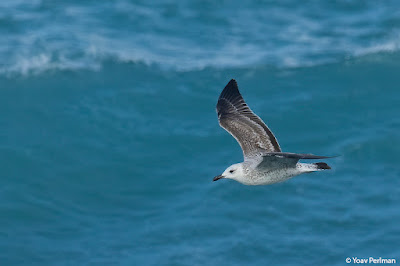
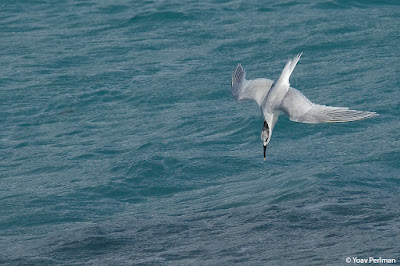
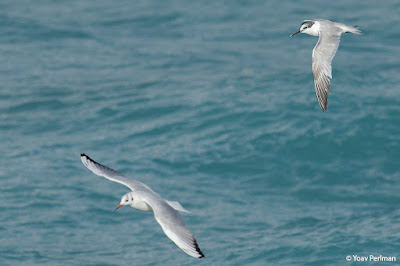
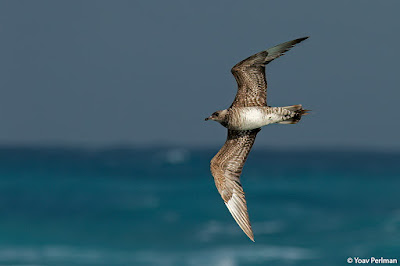
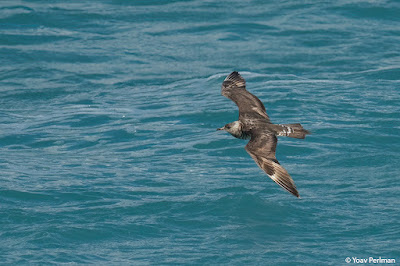
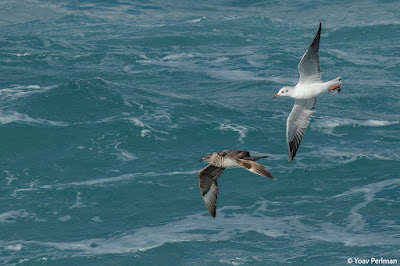
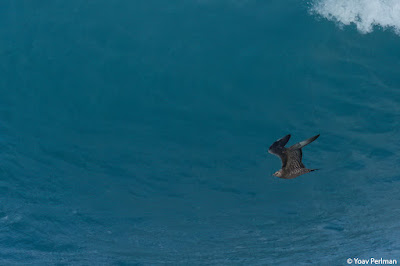
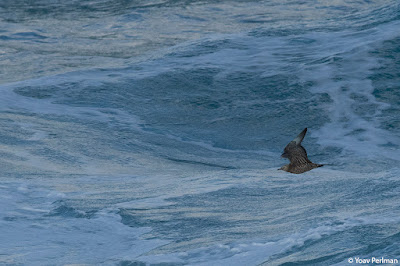
Wow, what a year this was. It was a year of extreme birding non-stop, accompanied by professional changes - never a dull moment. As in 2020, COVID-19 prevented me from boarding a plane, so my birding was focused internally. My birding in 2021 was dominated by my Big Year effort; more on this below. I did a lot of fieldwork, and continued to bird very hard, every day. As in previous years, I will summarise the year thematically, here we go:
Big Year
After doing well in 2020 but not well enough, I was determined to give it all I can in 2021. I knew that I have to see as many birds as possible from January 1st, and not let go for a minute until the year ends. I managed to keep the pace throughout the year. Check my monthly totals in eBird below - my effort in the first months of the year is visible. Only in June I dropped below 170 species per month; in seven months I saw over 200 species. The drop in December is a result of me having a new job, restraining me to more local birding, and also the fact that I had very few new birds left to see.
Wilson's Phalarope - lingered from 2020
Three-banded Plover, also lingered from 2020
Lesser Yellowlegs - found during the last days of 2020, lost, and refound in February 2021
I also made an effort to see as many rare but regular wintering species, to save me time in December:
Early spring migration brought wonderful colours and sounds:
Rufous-tailed Rock-Thrush - half an hour later
In spring, two first for Israel arrived - very exciting birds:
In late spring Israel was flooded by an exceptional wave of migrants. Its epicenter was in southern Israel, but was felt well everywhere. It was really exciting to go out birding, and difficult spring came in big numbers, such as River Warbler and Whote-throated Robin. Our
Global Big Day run on May 8th exposed us to some extreme migration experiences that will be remembered for years to come.
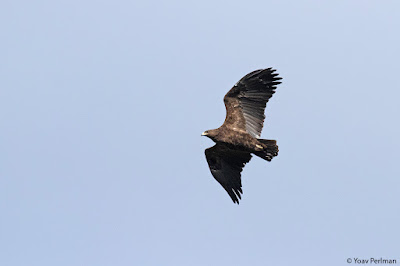
Tawny Eagle was a fine bird in June, the only species I saw in 2022 that is not on my IL list in eBird:
Later in September I added
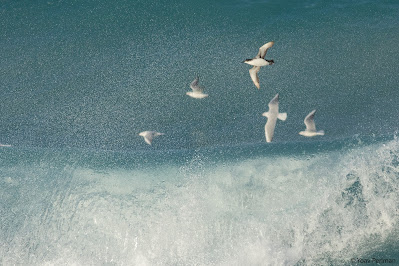
Swinhoe's Storn-Petrel during a pelagic trip in the gulf, and got my first (awful) photos of the species in Israel:
In early autumn migration was fantastic again, and the necessary additions to the year list were added.
In early October there was a good run of rarities, my personal favourite was the
Pin-tailed Snipe near Tel Aviv:
November was excellent too. There was an unprecedented arrival of rare eastern buntings. Both firsts for Israel, Black-faced and Chestnut, weren't really twitchable, but I managed to twitch a
Rustic Bunting at Ma'agan Michael.
Oriental Turtle Dove was a sweet self-addition:

Thick-billed and Temminck's Larks; there was a Turkestan Short-toed lark there too
Red-breasted Merganser in early December was my 400th bird of the year - a good reason to celebrate:
My final new bird of the year was
Alpine Accentor on Mt. Arbel on December 28th - my first observation in Israel for 30 years, what a fantastic way to end my Big Year with 402 species! This is a new Israeli record. In fact I think this is the second highest score in the Western Paleacrtic this year, only my friend
Emin in Turkey did better than me. I wasn't sure I'd be able to reach the mythical 400 when I started running this year, so I'm over the moon with this score. It certainly takes a huge effort to see 402 out of 417 species reported in Israel this year (this national total currently includes a few exotics like Mandarin and Nanday Parakeet that I avoided). I had a few painful dips and misses - my worst gap is Fieldfare, that showed only few times this year; also the failed twitches for Red-necked Grebe and Lappet-faced Vulture were painful. However, I am proud of my achievement - hopefully it will inspire others to go for Big Years here in Israel.

Huge respect to Avner Rinot and Jonathan Meyrav - they both had a crazy year too - 403 next year lads!
Igal Siman Tov's total is impressive - reaching 377 species with a disability is extraordinary.
Fieldwork
Fieldwork towards the national breeding bird atlas took me mainly south, where I was fortunate to visit some beautiful desert localities, and enjoy their birds:
Desert-breeding Short-toed Eagle
Arabian Warbler
Migrant rather than a breeder in the desert, but a photo I like - Eastern Black-eared Wheatear
Late spring fieldwork on Mt. Hermon is always a treat. The scenery is breathtaking, and the special birds breeding there are wonderful.
semirufus Black Redstart
* This Syrian Serin was no photographed on Mt. Hermon in summer, but on Mt. Amasa in the northern Negev in December.
Local birding
During a Big Year, obviously less time is left for local birding. However, I did my best to explore my surroundings when I was not away. My local patches, walking out of home, didn't produce any proper rarities, which is expected by the fewer visits. yet it was nice to add quality yearbirds such as Marsh and River Warblers there, enjoy good migration in nearby
Hulda Reservoir and
Tal Shachar - so much to see near home.
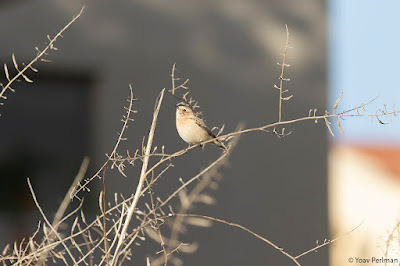
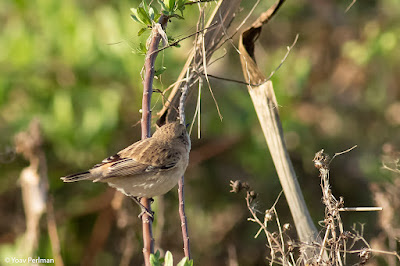
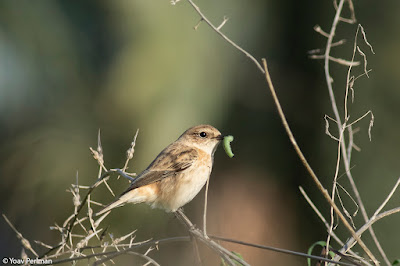
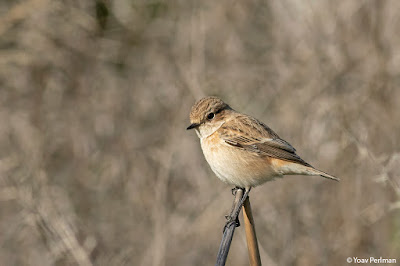
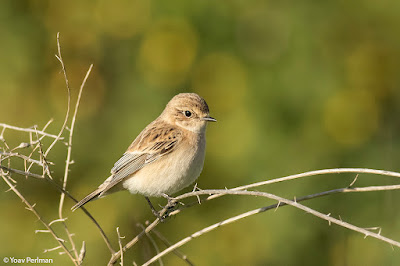
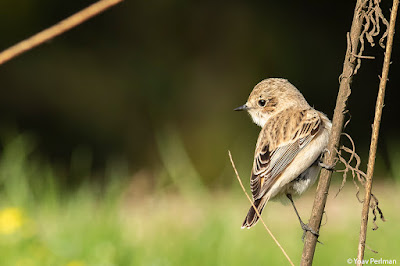
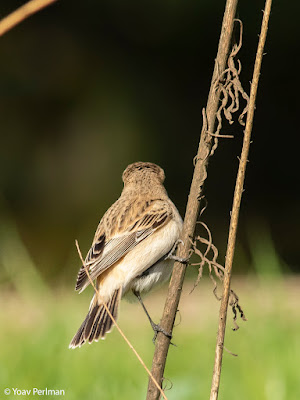
Siberian Stonechat near home
Leucistic Eurasian Jackdaw in Tsor'a - not a rarity but a fascinating bird
Awesome to spot this
Oriental Honey-Buzzard migrating over within a stream of several thousand Euro Honeys:
Butterflies
In previous years butterflies featured more prominently on my annual summary. This year I had less time for butterflies. Also I sold my Olympus kit - its only advantage was the ability to take half-decent butterfly photos. Still, I managed a few butterflies. Not listing them yet, maybe that will happen in the future...
Levantine Vernal Copper
Green-striped White
Desert Bath White
False Baton Blue - one of the rarest butterflies in Israel, a bit of a blocker actually
Salmon Arab
Arabian Sapphire
Pomegranate Playboy - in the garden
That day on Mt. Meron with the Eleonora's produced good butterflies too, from top left - Brown Argus, Southern White Admiral, Tawny Silverline, Levantine Silverline, Small Copper, Wall Brown, Freyer's Grayling, Holly Blue:
Summary and next year
This year was really intensive, because on top of the Big Year effort I was
promoted recently. It has been a massive year, not sure if I can ever repeat that. The huge effort requires stamina, to keep going and going. In the next few years I don't think I will repeat a Big Year effort. I need a slower year now. Not that I will stop birding, never. I still take part in the
checklist-a-day-challenge, that I upgraded to proper-birding-every-day (currently on a checklist streak of 870 days), and I will still do fieldwork, and hopefully there will be some world travel in 2022.
Thanks
First. my deep love and appreciation to my family, primarily my wife Adva. The fact that she did not dump me after such a year deserves admiration. My birding companions and close friends - Jonathan, Piki, Rony, Meidad, Amir, Yotam, Yosef, Re'a and many others - you are awesome, without your support this would not have been possible. Sorry to all those wonderful people I didn't mention here. My boss Dan Alon was also very tolerant - thank you Dan.
Swarovski Optik provide me with the best optics - I am very grateful. Thank you to all my followers and readers here on the blog and on my social media channels - your ongoing support is truly motivational.
I wish you all a fantastic 2022 - may we learn how to better protect our world and its nature, and respect each other. Happy New Year!