Showing posts with label Western Rock Nuthatch. Show all posts

Wednesday, June 24, 2020

Birds and butterflies of Mt. Hermon

On Monday and Tuesday I drove up to Mt. Hermon with my brother and Amir. We joined Yosef's annual ringing project at the drinking pools below the lower cable station, that's been running there since early 1990's. Great to see Yosef operating the project so well.
Ringing was on the slow side - it seems that breeding season is very late this year, and there's still much water up in the higher elevations. Still, it was great to be there and enjoy quality species without pressure of hundreds of birds waiting in bags. My photos aren't as good as Yosef's field studio results, yet I am quite pleased with the macro abilities of my Olympus system, both for in-hand bird photos and for butterflies (see below). Here are some quality birds we had on both days:

Syrian Serin (2cy+ male)

Western Rock Nuthatch (1cy)

Upcher's Warbler (2cy+)

Sombre Tit (1cy)

Rock Sparrow (2cy+)

semirufus Black Redstart (1cy)

Common Chiffchaff (1cy) - produced locally. The expansion of Common Chiffchaff in northern Israel is remarkable, especially as it seems that they may represent an unknown taxon


The highlight was a family of three White-throated Robins - dad, mum and their young. This is a 2cy male (hatched 2019) - note the retained pale-tipped GC. He's now is the middle of an extensive pre-migration moult, hence his scruffy look.


Other birding highlights included flyover Pale Rockfinches, and a single Chaffinch. eBird checklist for Tuesday morning is here.

Mt. Hermon is very special for butterflies a well; several species can be found in Israel only there, and there are a few endemics as well. As a total amateur I spent a little time watching butterflies coming in to drink and sip minerals below the ringing site - the ponds are a huge butterfly hotspot. The relatively slow ringing allowed me to divert my attention for a few minutes, while suffering bullying and disgrace from other ringers. In a very short while I managed to photograph 11 species - I am still not good enough to identify them in the field; I collect photos and identify them at home, with the aid of others (thanks Piki, Avner and Noam!).
To my eyes, the most spectacular butterfly was the Cardinal (Argynnis pandora) - an honorary bird:


Those green rear wings are gorgeous

Large number sof blues of several species we fond on the mud. The most abundant (when I watched) was Long-tailed Blue, which isn't unique to Mt. Hermon:


Other species included Eastern Brown Argus:


Nicholl Blue

Holly Blue

Hercules Hairstreak

Palopea Grayling

Eastern Dawn Clouded Yellow - extremely worn

Olive Skipper

Hermon (Persian) Skipper

Large Wall Brown

Levantine Marbled White


Thanks to Yosef for arranging the session, and to all the good friends who helped there.

Thursday, December 19, 2019

Decade summary #4 - Best of 2013

2013 was such a busy year for me that I had to break up the annual summary into two parts (Jan-Jun and Jul-Dec). Early in the year I visited UK and NL, where I experienced proper wild goose chasing for the first time, including this smart Black Brant on the island of Zeeland:


I spent much of the spring doing breeding atlas work on Mt. Hermon that produced fascinating stuff, like this perfect Western Rock Nuthatch:


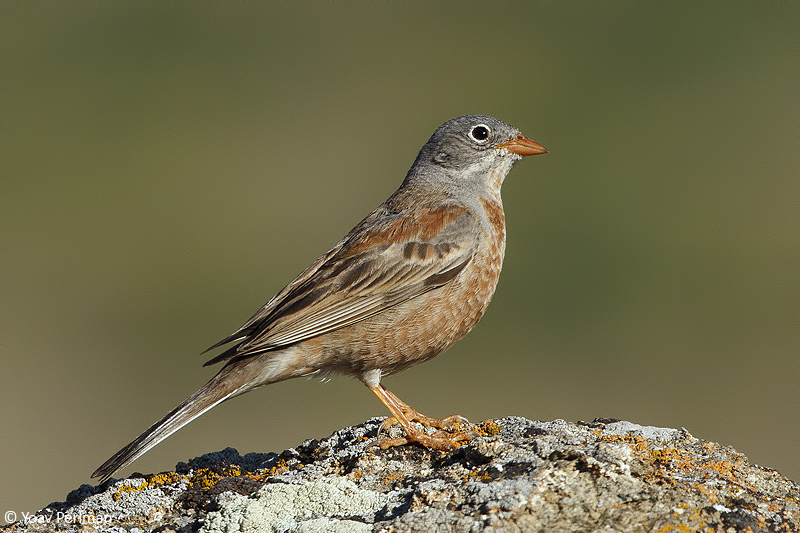
In June I returned to eastern Turkey with Amir and Gidon. Birding was great, with highlight being the beautiful Grey-necked Bunting:


Rarities came in thick and fast, including Yellow-billed Stork, Lesser Sand-plover (4th record), Pintail Snipe, and a first for Israel, Snow Bunting, that proved to be most obliging until it ended up in the talons of a Kestrel...


On the human front, in 2013 I was lucky to spend inspirational time with the late Martin Garner, in the UK and in Israel.


Sunday, May 5, 2019

Global Big Day

Yesterday I teamed up with Jonathan and Re'a to take part in Global Big Day. Our plan was to record as many species as possible, and also to connect with some specialties that are less likely to get recorded elsewhere. We did not plan our route too carefully, as this was not a competition but a challenge, and we were prepared to adjust and be spontaneous if necessary. Still, our plan was pretty ambitious - it included cross-country, night-to-night birding. I set off after 02:00 to meet up with the others. Just outside my town a European Nightjar was sat on the road - good start! We then drove al the way up to the Hula Valley. In Ayelet Hashachar we had a vocal family of Tawny Owls, but failed to find other owls. Luckily Jonathan had scops and long-eared before we met up.

Tawny Owl

We were joined by Hula-man Nadav for an hour of dawn birding at Agamon Hula which was pretty sweet. 76 species, highlights included White-tailed Eagle, Black Francolin, Marbled Duck, Golden Oriole, Spotted Crake and many more (eBird checklist here). Perhaps most impressive was a phenomenal roost take-off of Sand Martins. We VERY conservatively estimated 20K, but in the car quietly suggested six-figures. Quite a spectacle. A jungle Cat that trotted along in front of our car at dawn was sweet too.


From there it was up to Mt. Hermon. We first birded the slope above Majdal Shams. We clocked on first Hermon specialties quickly, most importantly Syrian Serin that I don't think was recorded elsewhere in the world. This area was also productive for quality migrants - Barred Warbler and Wood Warbler. eBird checklist here.

Wood Warbler

As soon as the military checkpoint opened up we sped up the mountain towards the lower cable station. We did a quick, clean sweep of Hermon specialties, including Western Rock Nuthatch and Sombre Tit (eBird checklist here). Even though we rushed it, it was still fantastic to take in the breathtaking scenery and cool temperatures at this altitude, where spring blossom has not diminished yet.


Rock Bunting

Too close

Next stop was at Susita, overlooking Lake Kineret. We quickly found there Long-billed Pipit and other batha specialties, and enjoyed a bit of raptor migration (eBird checklist here). During the entire Big Day we never connected with proper raptor migration - shame. Then it was on to Kfar Ruppin in the Bet Shean Valley. By then it was scorching hot and bird activity was relatively low. Took us a while till we found a good fishpond that contained many shorebirds, though variety was somewhat minimal ('only' 60 species in an hour of birding). Roller, Osprey, Curlew Sands were some notable birds - eBird checklist here.

Then it was the long, exhausting drive all the way to Ein Gedi. We easily found almost all desert birds we looked for - Fan-tailed raven, Barbary Falcon, Sand Partridge, Arabian Babbler etc. (eBird checklist here). Things were looking pretty good!

Fan-tailed Raven


We ended our daytime birding with two wetlands in the southern Dead Sea region - Heimar reservoir (Dead Sea Sparrow etc., eBird checklist here), and beautiful Navit Pools that were productive as ever - African Swamphen, Blue-cheeked Bee-eater, shorebirds etc. (eBird checklist here).

Stonking male Dead-Sea Sparrow

Brilliant Arabian Green Bee-eater

Too close - see below


After dusk we efficiently connected with two iconic nightbirds - Nubian Nightjar and Desert Owl (is it the first time ever Tawny and Desert Tawny were sen in one day?) - a fitting end to an epic day. 

Our cumulative total was 164 species - Jonathan missed few species Re'a and me saw before meeting up, and vice versa (my personal total was 160). It was so much fun - good, solid birding all day long. Our route was a bit extreme - I drove 870 km, and of course we ran out of time and had to skip one site (Mt. Amasa). But all in all I think we did pretty well. As in any Big Day, we missed many silly birds (such as Great White Pelican, Scrub Warbler), saw few birds we hadn't expected (Wood Warbler), enjoyed bird-rich sites and casual flybys and 100 kmph gifts (Raven, Little Swift) - that's what Big Days are made of.

A few thanks to summarize:

Jonathan, Re'a and Nadav - you guys rock. I thoroughly enjoyed spending the day with you, we never stopped laughing and our spirits were high throughout (when you were awake...). Thank you!

eBird Central organized this amazing event - I feel privileged to work with you guys and call some of you my friends.

Swarovski Optik - thanks, as always, for giving me the opportunity to use your supreme optics, that certainly made the difference.

See you in #GBD2020!


Monday, April 28, 2014

Hermon breeding survey - so here all the migrants are

Long distance driving, cross country birding - two ways to describe my life lately. On Saturday evening I returned from Eilat, and Sunday 02:00 left home towards Mt. Hermon.
Yesterday was day one of the first session of the breeding atlas of Mt. Hermon. We're repeating last years' efforts - I'm sure we will find many differences, mainly because there was virtually no winter snow on the mountain, and plant productivity began very early this year. It seems that birds responded the same and started breeding early as well.
So yesterday I worked with Roei on the steep slope above Majdal Shams, that was very productive last year. Immediately after walking out of the pickup we started hearing tons of migrants - this was really overwhelming, especially after the migrant-less days I had at Eilat. Every tree was dripping with Blackcaps, and there are many trees there. Out of every bush several Thrush Nightingales were calling - I must have had about 150 during the whole morning - almost Ngulia standards! Other species seen in good numbers were about 20 Barred and 30 Willow Warblers.
Not only migrants, also breeding birds performed well - we found almost everything we had expected, and there was good breeding activity of most species. Roei refound the Finsch's Wheatear we had found breeding last year which is great. We had two singing Upcher's Warblers, six breeding pairs of Western Rock Nuthatch, several breeding Creztschmar's Buntings, many breeding Eastern Black-eared Wheatears, some families of Sombre Tit, many next-building Syrian Serins, incuding some inside the village, a pair of Crag Martins - really good and typical Mt. Hermon variety.

Western Rock Nuthatch


 Thrish Nightingale - one of many

Eremostachys laciniata - impressive 1 m tall flower - couldn't find out what the English name is

Wednesday, June 26, 2013

Turkey day 3 - Işak Paşa to Van Gölü - colours and quality

For me it felt like an overall slower day, but looking back and reading at this post gives me the impression of a cracking day. Anyway, after the exhausting climb up Mt. Ararat the previous day, we started off early on June 22nd and first went to check the area around Işak Paşa castle south of Doğubayazit. This is a well known site for Grey-necked Bunting and Mongolian Finch. We saw no buntings at all, and of Mongolian Finch we had only some brief flyby views. So what did we see?
First we birded along the good track heading south from the castle to the grassy upland plains. As anywhere else in this region, Black-headed Bunting was the most obvious species. I saw so many during our trip and this was the first (and last) one I photographed: 


We tried really hard to locate Mr. buchananni, but all we could find were Ortolans - they were everywhere. We got worried and started suspecting that all previous birders misidentified them... 

Ortolan - male

Ortolan - female

Still we had many good birds there. Some brief Mongolian and Crimson-winged Finches, Twite, quite many White-winged Snowfinches, and one singing male Common Rosefinch that showed rather well, our only rosefinch of the trip:


We had some Red-fronted Serins around the palace, again showing too well - in fact one landed for a second on my lens when I was trying to photograph it:


Quite many Whinchats breeding on the grassy plains:


This is dedicated to my Israeli followers:

עקעק

Again, good numbers of Western Rock Nuthatces and Eastern Black-eared Wheatears were seen breeding on the rocky hills, as well as our only Hill Sparrows of the trip. A pair of Golden Eagles breeds on the cliff just around the corner from the castle.


Unfortunately, here like everywhere else in E Turkey, signs of intensive huting pressure were very evident, with few mammals and lots of pellets: 


Işak Paşa castle - Doğubayazit in the background
 

After drinking coffee with millions of holidaying Turks at the castle gardens, we headed back south. A short stop at Tendurek moutain pass produced a very very cooperative Rufous-tailed Rock Thrush. Who said that only in the tropics you get colourful birds?

Tai Chi training 


 And then he came to check us out:


 And even sang a little for us:

At Çaldiran we met some new Kurdish friends over lunch:


When planning this trip, I used info and tips from some good friends. But I learned that I need to double-check my info, as I made a stupid mistake. There are two Nemrut Daği's in Turkey - one with a crater, overlooking the west shore of Van Gölü, and another some hundreds of km west (where Kurdish Wheatear breeds). I discovered that only when we were on the road heading to the wrong Nemrut Daği. Anyway the trip was much longer than we expected, and we decided to give Nemrut Crater a miss. Next time. We focused on reedbeds around the lake for Paddyfield Warbler. First we checked a small reedbed along the road on the N shore of the lake, that looked good (  38.780481° N   42.608487° E). Indeed there was some paddyfield activity there but it was too hot and we saw very little. A family of Armenian Stonechats showed there - the female was terribly worn. What a dark-looking bird!


That's one of the two recently-fledged juveniles of the Armenian Stonechat:


Then we followed a tip from Emin and headed to a fantastic site in the NW corner of the lake, just south of Ahlat ( 38.733648° N  42.441921°E). This is a very interesting and diverse wetland, with a matrix of small canals and patches of reeds and bullrush. We had plenty of Paddyfield Warblers there, some of them showing very well, especially in the small clumps in the NE side. All were adults - I suppose the young have not fledged yet, and very worn.But still good looking acros, as good as acros can get...

Paddyfield Warblers


I know this is out of focus but note the distinctive wing formula - very short and deeply notched P2, and P4 well emarginated (probably also P5), creating a very short, rounded and fingered wing structure. Dark distal half to lower mandible was very prominent too.


Other good birds at this site included a pair of Ruddy Shelduck, some Moustached Warblers, Bearded Reedlings and Penduline Tits. In the end we made one hell of a circuit to see Paddyfield Warbler; I'm sure there are sites much closer to Van, but it was nice to be there. 
After we were done there we started heading back to Van along the south shore of the lake. Beyond Tatvan we used the last minutes of sunlight to check a patch of scrub / degraded forest ( 38.455103° N  42.323805° E). There are few dense patches of forest or scrub in the Van region, and it was good to bird there for a short while. I am not sure whether the tress there are natural or planted (oaks and polar), but this site is very different from anywhere else in Van region. We didn't have anything special there, just some singing Nightingales among other common forest birds, but this site looks promising and certainly worth another check. I played Phylloscopus music but nothing responded...
In Van we stayed at the pretty shabby Medi Hotel, quite close to the airport.